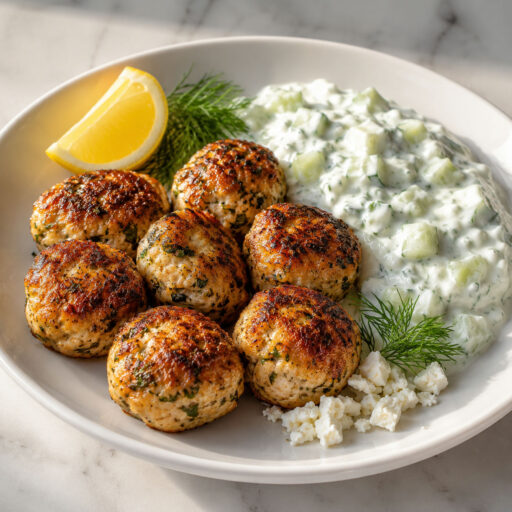
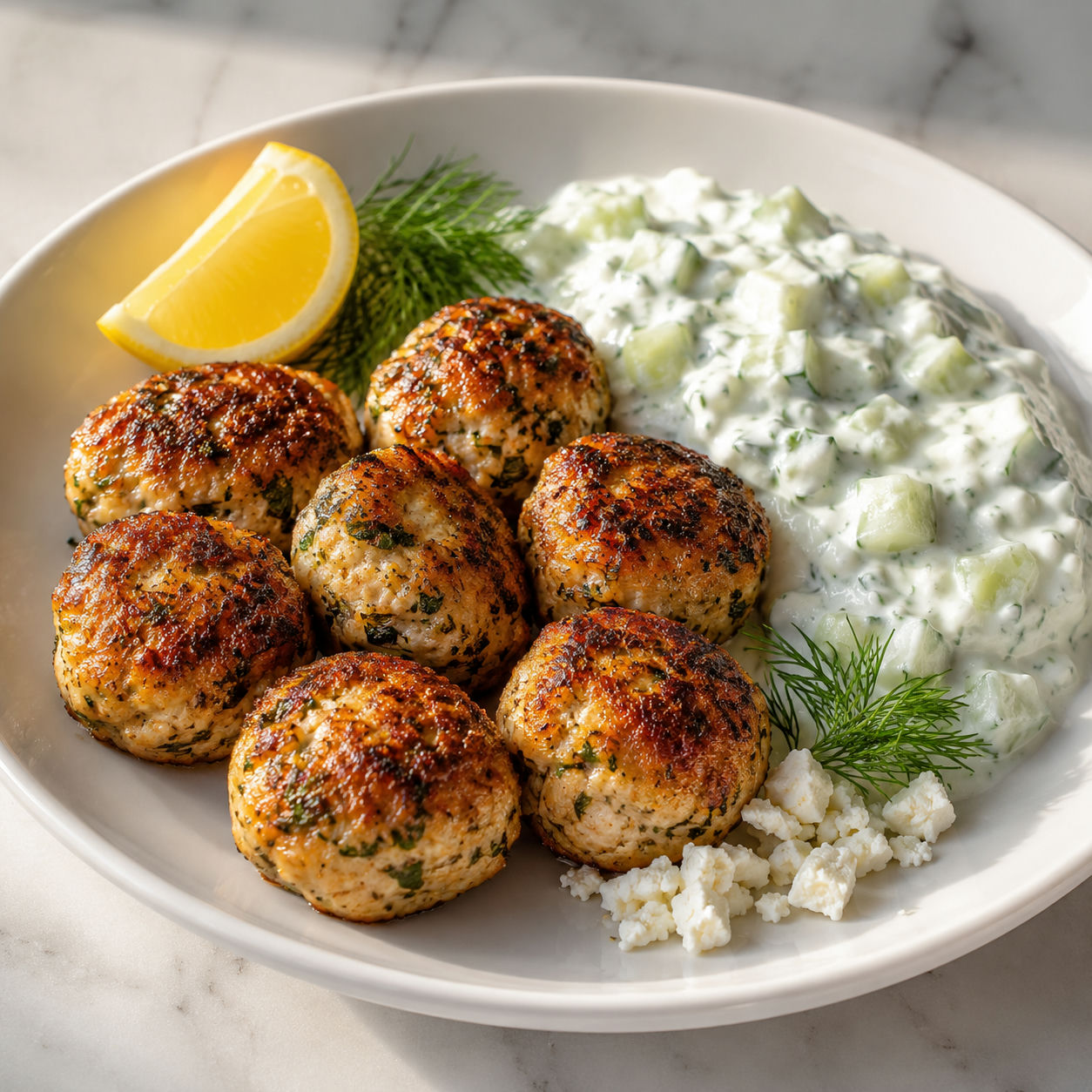

There are Greek chicken recipes I make for a crowd and ones I make on a Tuesday night when I just want something good without much thinking. This one fits both. The meatballs come together in a single bowl, sear fast in one pan, and finish in the oven while you pull the tzatziki together from a few refrigerator staples.
What makes the combination work is balance. The meatballs are rich and herb-forward. The tzatziki is cool and bright. Neither one overpowers the other. Ground chicken keeps things on the lighter side without feeling like a compromise.
You can serve these in warm pitas, over rice, alongside a simple salad, or just straight from the pan with tzatziki for dipping. They travel well to gatherings and reheat without drying out, which is more than most ground chicken recipes can claim.
The Mix Behind These Greek Meatballs
You do not need many ingredients, but the ones you choose matter. Fresh parsley and mint rather than dried, feta crumbled from a block rather than pre-shredded, and full-fat Greek yogurt for the tzatziki make a real difference in the finished dish.
- Ground chicken. The base of the meatballs. A 93/7 fat ratio keeps them moist without being greasy.
- Feta cheese. Crumbled directly into the mix, it melts slightly during cooking and adds salty, tangy richness in every bite.
- Fresh parsley and mint. The two herbs that define the Mediterranean flavor profile here. Dried versions work in a pinch, but fresh is noticeably better.
- Garlic. Goes into both the meatballs and the tzatziki. Mince it fine so it distributes evenly rather than landing in pockets.
- Dried oregano. The backbone herb. One teaspoon in the meatball mix is plenty.
- Panko breadcrumbs. The binder that keeps the meatballs from being dense. Gluten-free panko swaps in at the same quantity.
- Full-fat Greek yogurt. The base of a good tzatziki. Low-fat versions are thinner and less creamy, and full-fat Greek yogurt carries more protein and active cultures that make the sauce genuinely satisfying.
- English cucumber. Grated and squeezed very dry before going into the tzatziki. This is the step most people skip and most people regret.
- Fresh dill. The classic tzatziki herb, brighter and more aromatic than its dried counterpart.
Building the Dish Step by Step
- Make the tzatziki first. Grate the cucumber on the large holes of a box grater, then bundle it in a clean kitchen towel and squeeze out as much moisture as you can over the sink. Mix with Greek yogurt, minced garlic, dill, lemon juice, olive oil, and a pinch of salt. Cover and refrigerate while you prepare the meatballs.
- Mix the meatball base. Combine ground chicken, grated onion, minced garlic, feta, parsley, mint, oregano, panko, egg, salt, and pepper in a large bowl. Mix gently with your hands until just combined. Overmixing leads to tough meatballs.
- Form and chill. Roll the mixture into balls about 1.5 inches across, which yields roughly 20. Set them on a parchment-lined plate and refrigerate for 15 minutes. Cold meatballs hold their shape better in the hot pan.
- Sear until golden. Heat olive oil in a large oven-safe skillet over medium-high heat. Sear the meatballs in batches, 2 minutes per side, until deeply golden. Do not crowd the pan. Transfer to a plate as each batch finishes.
- Finish in the oven. Return all the seared meatballs to the skillet and roast at 400°F (200°C) for 10 to 12 minutes until cooked through. The safe internal temperature for ground poultry is 165°F (74°C).
- Serve. Pull the tzatziki from the fridge and stir. Plate the meatballs with a generous spoonful of tzatziki, warm pitas, a lemon wedge, and a scatter of fresh herbs.
Why Squeezing the Cucumber Matters
Tzatziki made with unsqueezed cucumber turns watery within minutes, even if it looks thick right after you mix it. Grated cucumber releases a surprising amount of liquid, and that liquid dilutes the yogurt and washes out the garlic and dill.
The fix takes about 30 seconds. Grate the cucumber, pile it into a clean towel, and squeeze hard over the sink. You will be surprised how much comes out. After that, your tzatziki stays thick and creamy for days in the fridge. The same technique is at the core of the tzatziki in our Greek chicken gyros, if you want to see how it works in a different format.
Feta Belongs Inside the Meatballs
Most people use feta as a topping after cooking. Crumbling it directly into the ground chicken before forming is what sets these meatballs apart from a standard recipe. It melts slightly during cooking, distributing salty pockets of flavor throughout rather than just sitting on the surface.
Use feta packed in brine and crumble it yourself. Pre-crumbled feta is drier and does not melt as well. If you love the combination of Greek herbs and cheese in chicken dishes, try these same flavors in a completely different format with our baked Greek lemon chicken.
Searing Without the Sticking Problem
Ground chicken meatballs stick more than beef ones because chicken is leaner and does not develop the same natural release. Two things fix this. Get the pan genuinely hot before the oil goes in, then let the oil heat for another 30 seconds before the meatballs touch it. Do not move them early. They stick at first and release on their own once the crust forms, usually after 90 seconds to 2 minutes. Moving them before the crust sets is what tears the meatball apart.
How to Serve and What Pairs Well
Warm pitas are the obvious choice, and they earn that reputation. Load a few meatballs into a pita with a spoonful of tzatziki, sliced tomato, and thinly sliced red onion for a full meal you eat with your hands.
For a sit-down dinner, pair them with Greek roast potatoes with lemon and feta or a cucumber-tomato salad dressed with olive oil and red wine vinegar. They also work well over lemon rice. If you have leftover meatballs and tzatziki the next day, spreading the tzatziki on a naan base and adding sliced meatballs gives you a version of our tzatziki chicken naan pizza with almost no extra effort.
Make Ahead and Store with Ease
These are a genuinely good meal-prep item. The cooked meatballs keep in the fridge for 3 days and reheat well in a 350°F oven for 10 minutes covered with foil. They freeze well for up to 2 months. The tzatziki keeps for 4 days. Stir it before serving since some liquid may separate as it sits.
For easier weeknights, make a double batch of the meatball mixture and freeze half uncooked on a parchment-lined sheet until solid, then transfer to a bag. Pull them out the night before, thaw in the fridge, and cook as directed.
FAQs
- Can I bake these meatballs without searing them first?
-
Yes. Arrange them on a parchment-lined baking sheet and bake at 400°F (200°C) for 18 to 22 minutes, flipping once halfway through. You will miss the golden crust from searing, but the flavor is still very good. A quick broil for the last 2 minutes brings back some of that color.
- Can I substitute ground turkey for ground chicken?
-
Ground turkey works well with the same quantities and the same method. Use an 85/15 or 93/7 blend rather than extra-lean turkey, which can dry out in the oven. The herb and feta profile stays the same and the results are nearly identical.
- How long does homemade tzatziki keep in the fridge?
-
Tzatziki keeps well in an airtight container for up to 4 days. It often tastes better on day two once the garlic has mellowed into the yogurt. Stir it before serving as some liquid may separate as it sits.
- Can I make the meatballs ahead of time?
-
Yes. You can mix and form them up to 24 hours ahead and keep them covered in the refrigerator. You can also cook them fully, cool them, and refrigerate for up to 3 days or freeze for up to 2 months. Reheat in a 350°F oven for 10 minutes covered with foil, or in a covered skillet with a splash of water.
- What do I serve with Greek chicken meatballs?
-
Warm pitas and a simple Greek salad are the classic move. Lemon rice, roasted vegetables, or a platter of hummus and olives all work well too. For a lighter option, pile the meatballs on arugula with a drizzle of olive oil and a squeeze of lemon over everything.
- How do I keep the meatballs from falling apart?
-
Make sure the panko and egg are both in the mix. They are the binders. Grate the onion rather than chopping it so it disperses moisture evenly without leaving large chunks that weaken the structure. Chilling the formed meatballs for 15 minutes before cooking also helps them hold their shape during searing.
- Can I make this recipe gluten-free?
-
Substitute the panko with gluten-free panko or almond flour in the same quantity. Everything else in the meatballs and the tzatziki is naturally gluten-free. Check your feta label too, as a small number of brands add stabilizers that contain gluten.
References
Sources cited in this recipe.