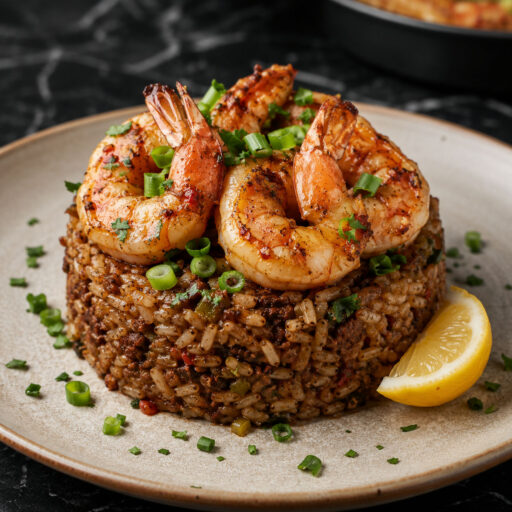
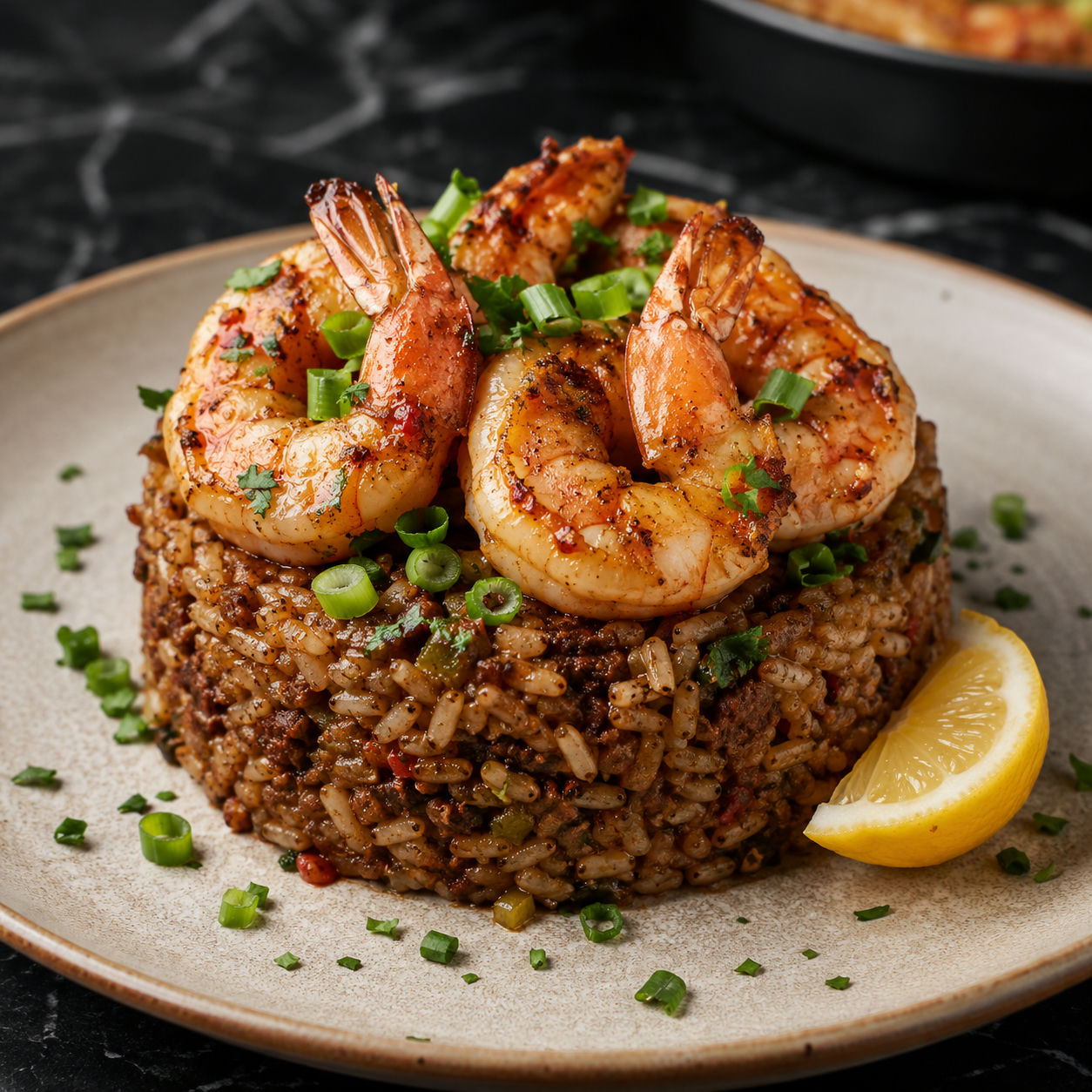

Stacked shrimp dirty rice takes a Louisiana classic and makes it look deliberate on the plate. The rice cooks with andouille sausage, ground pork, and the Cajun holy trinity until it turns that deep, savory, speckled color dirty rice is known for. The shrimp go on last, seared fast in garlic butter with a hit of hot sauce, then arranged right on top of a pressed rice tower.
This is the kind of dinner that feels like a restaurant move but uses pantry staples you probably already have. Both components come together in under 45 minutes, and the plating, a packed ramekin flipped onto the plate, takes about 30 seconds. It works for a weeknight but it holds its own at a dinner party too.
The Cajun Pantry Behind This Stack
This recipe divides into two short ingredient lists that share most of their pantry overlap. Andouille sausage is worth seeking out because the smokiness and spiced heat it brings is something regular sausage simply does not replicate on its own.
- Long-grain white rice. Cooks up separate and fluffy so the molded stack holds its shape when unmolded onto the plate.
- Andouille sausage. Smoky, spiced, and deeply seasoned. It does most of the flavor work in the rice base.
- Ground pork. Adds richness and the browned bits help dirty the rice as it simmers in the broth.
- Onion, celery, and green bell pepper. The Cajun holy trinity. These three together are the flavor foundation for nearly every Louisiana dish worth making.
- Chicken broth. The rice absorbs it completely, pulling in all the savory depth from the sausage and vegetables.
- Cajun seasoning. Used in both the rice and on the shrimp for layered heat throughout the finished dish.
- Smoked paprika. Deepens the color and adds a subtle smokiness to both components without overpowering the other spices.
- Large shrimp. The centerpiece of the stack. They cook in minutes and stay tender as long as you pull them at the right moment.
- Unsalted butter and garlic. The base of the shrimp sauce. Simple and effective against the bold spiced rice beneath.
- Hot sauce and lemon juice. A quick finish that cuts the richness and brightens everything on the plate.
Building the Stack Step by Step
- Brown the sausage and pork. Heat vegetable oil in a Dutch oven or large deep skillet over medium-high heat. Add the diced andouille and ground pork and cook, breaking up the pork, until cooked through and lightly caramelized, 6 to 8 minutes. Leave the rendered fat in the pan.
- Soften the holy trinity. Add the diced onion, celery, and bell pepper to the same pan over medium heat. Cook until softened, about 5 minutes. Add the garlic, Cajun seasoning, smoked paprika, thyme, and Worcestershire sauce and stir for 1 minute until fragrant.
- Toast and simmer the rice. Add the rice and stir to coat it in the fat and aromatics for 1 to 2 minutes. Pour in the chicken broth, bring to a boil, then reduce the heat to low, cover tightly, and cook for 18 minutes until the liquid is fully absorbed.
- Rest the rice. Remove the pan from heat and let the rice rest, still covered, for 5 minutes. Fluff gently with a fork and taste for salt.
- Season and sear the shrimp. Pat the shrimp completely dry with paper towels. Toss with Cajun seasoning and smoked paprika. Melt the butter in a large skillet over medium-high heat until foamy. Sear the shrimp in a single layer for 1 to 2 minutes per side until pink and opaque. Add the garlic for the last 30 seconds, then finish off heat with hot sauce and lemon juice.
- Stack and serve. Pack the hot dirty rice firmly into a ramekin or 4-inch ring mold, pressing down with the back of a spoon. Hold a warmed dinner plate firmly against the top and invert quickly and confidently. Lift the mold. Arrange the seared shrimp on top and around the base. Garnish with sliced green onions and chopped parsley.
The Holy Trinity Does the Heavy Lifting
Dirty rice has been a fixture of Louisiana Cajun cooking for generations, and the holy trinity is the reason it tastes the way it does. Onion, celery, and bell pepper are not just aromatics here. They are the structural flavor of the dish. Cook the three down until the onion turns soft and the pepper sweetens before you add the garlic and spices. Adding them too early when the fat is screaming hot means scorched garlic and a bitter base. Give the vegetables their five minutes first. The layered depth that results is exactly what you find in classic red beans with savory rice and sausage, another Louisiana staple built on the same patient foundation.
How to Sear Shrimp Without Overcooking Them
Shrimp overcook in under a minute if you lose focus. The visual cue to watch is the curl. A loose C shape means they are done. A tight O means they went past it. Pat them bone dry before seasoning because surface moisture makes them steam instead of sear, and a steamed shrimp has no crust and a softer, less satisfying texture. Work in a single layer in a very hot pan. Crowding drops the temperature and you lose the browning entirely. If your skillet is not large enough, cook in two batches rather than cramming them in. The shrimp dirty rice with ground sausage and vegetables uses a similar searing technique if you want another side-by-side reference. According to the FDA seafood safety guidelines, shrimp should reach an internal temperature of 145°F, which in practice means fully opaque with no gray translucency left anywhere.
How to Unmold the Stack Cleanly
A 4-inch ring mold gives you the cleanest result, but a small ramekin or wide-mouth measuring cup works just as well. The rice needs to be hot and still slightly sticky from the broth when you pack it, so move quickly right after fluffing. Press firmly with the back of a spoon. When you flip, hold the plate flat against the top of the mold and turn both over in one smooth, decisive motion. Hesitating mid-flip is what causes it to fall apart. Confidence matters more than technique here. If you enjoy this kind of stacked presentation, the spicy California shrimp stack with avocado and cucumber takes the same format in a completely different direction.
Storing Leftovers and Getting Ahead
The dirty rice is the component worth making ahead. Cook it a day in advance, store it in an airtight container in the fridge, and reheat with a splash of chicken broth in a covered skillet over low heat until hot. The shrimp are best cooked fresh every time. They lose texture quickly and a reheated shrimp is always a sadder version of what it was. If you do need to store them, keep the rice and shrimp in separate containers and reheat the shrimp in a hot skillet for about 1 minute per side rather than the microwave. Everything keeps for up to 3 days refrigerated.
Swaps That Keep This Feeling Cajun
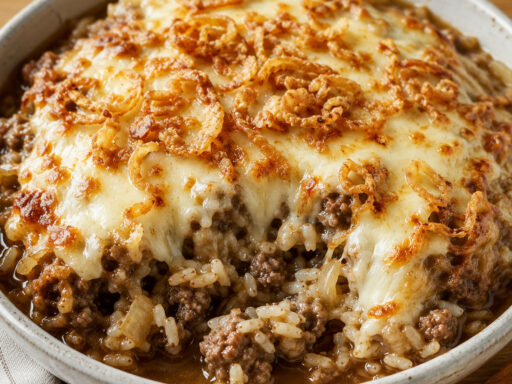
No andouille in your store? Smoked kielbasa is the closest substitute for that smoky depth. Skip the sausage entirely and lean heavier on the ground pork with extra smoked paprika if that is what you have on hand. Jumbo shrimp need an extra 30 to 60 seconds per side compared to large. For a gluten-free version, check your Cajun seasoning and Worcestershire labels since some brands include wheat as a filler. The dish goes fully dairy-free if you swap the butter for a neutral oil, though you lose a little richness in the shrimp sauce. For a version that swaps out the shrimp entirely and goes all in on beef, the hearty beef dirty rice dish follows the same method with ground beef in place of the pork and sausage.
FAQs
- What makes dirty rice “dirty”?
-
The color comes from cooking rice with ground meat and browned bits of sausage, which stain the grains a deep brownish hue as everything simmers together. Traditional versions use chicken livers, which break down and intensify the color even further. This recipe uses ground pork and andouille for a milder but still deeply flavored result that most people find more approachable.
- Can I use frozen shrimp?
-
Yes, frozen shrimp work well here. Thaw them completely under cold running water, then pat very dry with paper towels before seasoning and searing. Surface moisture is the enemy of a good sear and leads to pale, steamed shrimp rather than browned ones. Dry shrimp = better crust, every time.
- How do I keep the rice stack from falling apart?
-
Pack the rice tightly while it is still hot and slightly sticky right after resting. Use a small ramekin or 4-inch ring mold and press firmly with the back of a spoon before inverting. If it crumbles, the rice may be too dry. Stir in a small splash of warm chicken broth, let it sit for one minute, and try again.
- Can I make this ahead of time?
-
The dirty rice holds well in the fridge for up to 3 days. Reheat it with a splash of chicken broth in a covered skillet over low heat. Sear the shrimp fresh right before serving since they get tough when reheated multiple times. Making the rice a day ahead and cooking the shrimp to order is the ideal approach for hosting.
- Can I use chicken livers for a more authentic dirty rice?
-
Yes. Sauté about 4 oz of chicken livers in the pan first, chop them fine, then cook them with the ground pork. They dissolve into the rice as it simmers and give a richer, earthier flavor that is true to the Cajun original. The taste is stronger than expected but not gamey when balanced with the Cajun spices.
- What can I substitute for andouille sausage?
-
Smoked kielbasa is the closest swap in terms of smokiness and texture. Chorizo works for heat but shifts the flavor profile toward Mexican-leaning spices. Regular pork sausage is fine in a pinch but needs extra smoked paprika and cayenne to compensate for the missing Cajun punch that andouille brings naturally.
- How spicy is this dish?
-
Medium heat. The Cajun seasoning and andouille give it a solid kick without being overwhelming for most people. Reduce the Cajun seasoning to half a teaspoon and skip the hot sauce if you prefer mild. Add extra cayenne or more hot sauce at the end if you want more fire. Both components are seasoned separately, so you have two chances to adjust.
References
Sources cited in this recipe.