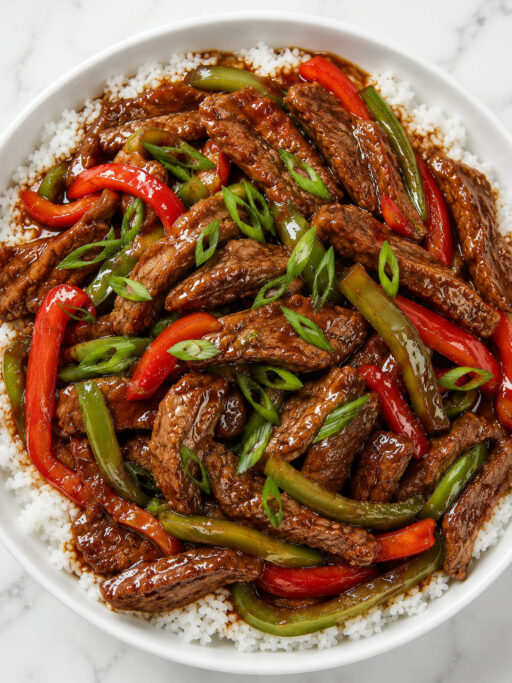
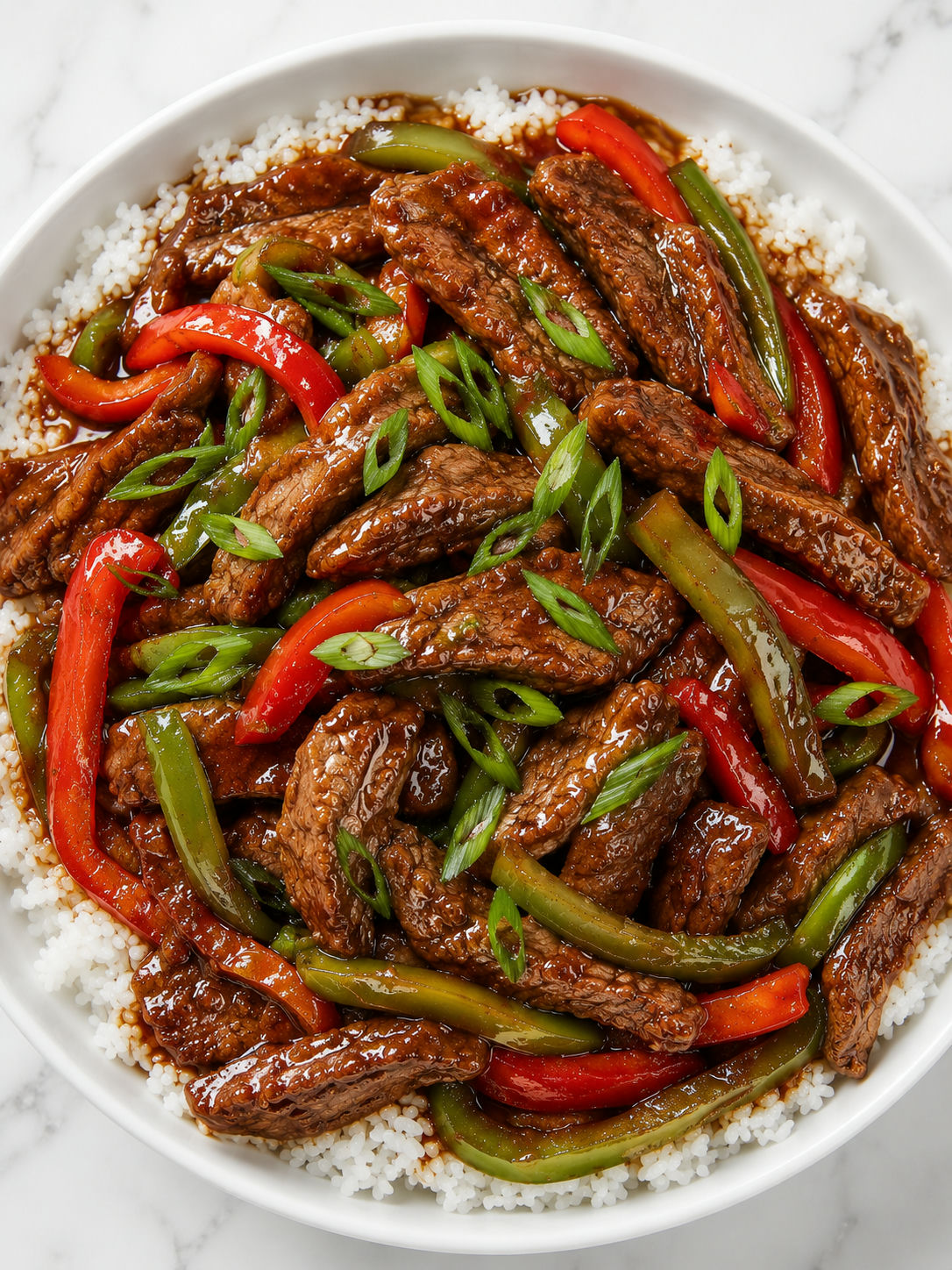

Pepper steak is one of those dinners that always shows up for you. The beef is silky, the peppers stay crisp, and the sauce hits that deep salty-savory note that makes everyone reach for seconds. I’ve made this on frantic Tuesday nights and lazy Sunday afternoons alike, and it never lets me down.
The secret is a five-minute cornstarch marinade, the same velveting trick Chinese restaurants use to keep their beef impossibly tender. You don’t need a wok or any special equipment. A large skillet gets the job done.
Serve it over plain white rice and dinner is fully handled. Once you make it, this goes straight into the regular rotation.
The Beef, Peppers, and Sauce You Need
The ingredient list is short and every item earns its place. Use the best soy sauce you can find and fresh garlic over garlic powder. Those two simple upgrades make the finished sauce noticeably better.
- Flank steak. Lean, flavorful, and easy to slice thin. It absorbs the marinade fast and cooks in minutes without drying out.
- Soy sauce. The backbone of both the marinade and the sauce. Use regular, not low-sodium, for full depth of flavor.
- Cornstarch. Does double duty: it velvets the beef in the marinade to keep it silky, then thickens the sauce into something glossy when added to the liquid.
- Oyster sauce. Adds rounded umami richness and a touch of sweetness the soy sauce alone can’t give.
- Red and green bell peppers. Red peppers bring sweetness while green ones add a subtle bitterness. Together they balance the sauce nicely.
- Yellow onion. Sliced into thin wedges so it softens just enough without going mushy.
- Garlic and fresh ginger. Fresh makes a real difference here. They go in hot and fast so they bloom without burning.
- Beef broth. Loosens the sauce and gives it body without making it watery.
How to Cook Pepper Steak Right
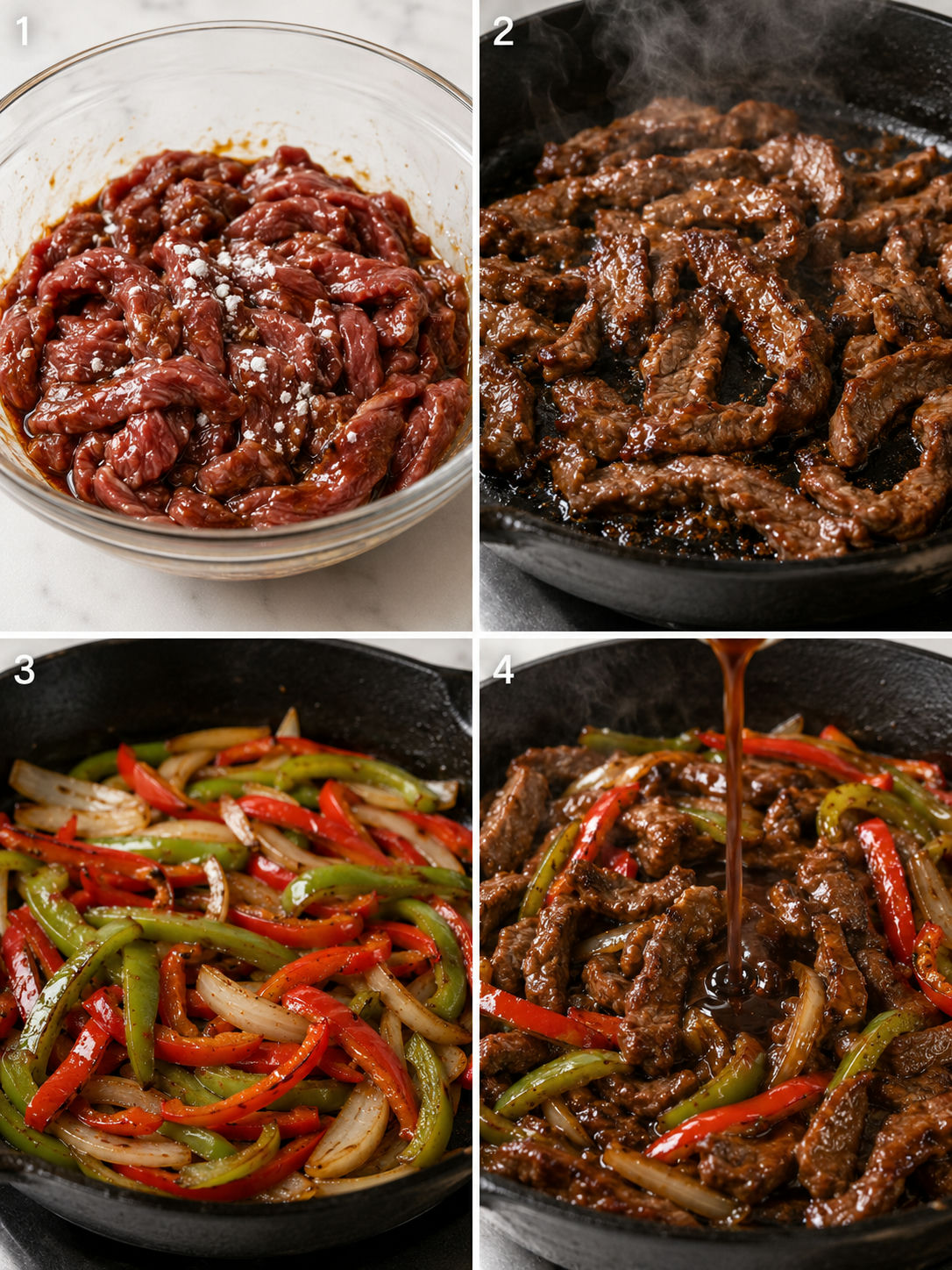
- Velvet the beef. Slice the flank steak thin against the grain, about an eighth of an inch thick. Toss with 2 tablespoons soy sauce, 1 tablespoon cornstarch, sesame oil, and black pepper. Let it sit for 10 minutes while you prep everything else.
- Mix the sauce. Whisk together the remaining soy sauce, oyster sauce, beef broth, the second tablespoon of cornstarch, sugar, and black pepper in a small bowl. Set it aside.
- Sear the beef in batches. Heat 1 tablespoon of oil in a large skillet over high heat until shimmering. Spread half the beef in a single layer and leave it untouched for 60 to 90 seconds to get a good sear, then stir once and cook 30 more seconds. Transfer to a plate and repeat with the remaining beef.
- Cook the vegetables. Add the second tablespoon of oil to the same pan. Cook the onion for 2 minutes until it starts to soften, then add the bell peppers and cook 2 to 3 minutes until bright and slightly tender but still with some crunch.
- Bloom the garlic and ginger. Push the vegetables to the edges of the pan. Add the garlic and ginger to the center and cook for 30 seconds until fragrant.
- Finish with the sauce. Pour the sauce into the pan and stir everything together. It will thicken in about a minute. Return the beef, toss to coat, and cook for 30 more seconds. Serve immediately over steamed rice.
Why Velveting Makes All the Difference
Velveting is a Chinese technique where you coat raw meat in a thin slurry of soy sauce and cornstarch before it hits the pan. The cornstarch forms a protective layer that holds in moisture as the beef sears. Without it, lean cuts like flank steak can turn tough and grainy in under two minutes.
Our Chinese pepper steak uses the same method, and it’s the reason restaurant-style beef feels so different from what most home cooks produce. Five extra minutes of marinating time earns you a noticeably silkier result. The team at The Woks of Life covers this technique in depth if you want to dig into the details behind it.
Slicing the Beef for Tender Bites
The direction you slice matters as much as the thickness. Look at the flank steak and find the long muscle fibers running along it. You want to cut across them, not parallel to them. Short fibers are easy to chew. Long ones are not.
For the cleanest slices, freeze the steak for 20 to 30 minutes first. It firms up just enough to cut cleanly without being frozen solid. Aim for slices about an eighth of an inch thick. Thinner than that and they overcook in seconds. Thicker and they won’t absorb the marinade properly.
Swaps That Keep the Dish Honest
No flank steak? Sirloin is a solid swap. Skirt steak works too and has even more flavor, though it can turn a little chewy if cut too thick. For the bell peppers, any color combination is fine. Yellow peppers are sweeter and orange ones land somewhere in between.
Want to mix up the vegetables? Add a handful of broccoli florets or snap peas with the peppers. Our steak and broccoli with chili hoisin glaze is a great reference if you love that pairing. Prefer a hands-off approach? The crock pot pepper steak carries the same flavors into a set-and-forget dinner. For a faster version with a drier finish, our pepper steak stir fry skips the glossy sauce and finishes in under 20 minutes.
Getting the Sauce Texture Just Right
The sauce should coat the beef and cling to the rice without turning gluey. If it gets too thick, add a splash of beef broth and toss. If it looks thin after a minute of simmering, let it cook for another 30 seconds without stirring and it will tighten up on its own.
For food safety, the USDA recommends cooking whole cuts of beef to an internal temperature of 145°F. For thin stir-fry slices that cook in seconds, no pink center and full opacity is the visual cue you want.
Serving and Storing This Dinner
Pepper steak is best served the moment it comes off the heat, over a bowl of steamed white rice. Jasmine rice is a natural match. Brown rice and cauliflower rice both work if you want to change things up.
Leftovers keep well for 3 days in the fridge. Reheat in a skillet with a splash of broth rather than the microwave to keep the sauce from breaking. The beef will be a touch firmer reheated, but the flavor actually deepens overnight, which is a nice bonus.
FAQs
- What cut of beef is best for pepper steak?
-
Flank steak is the top choice. It’s lean, flavorful, and slices beautifully against the grain. Sirloin and skirt steak are good substitutes. Avoid thick cuts like ribeye here since they won’t cook quickly enough to stay tender in a skillet sauce.
- How do I slice the beef thin enough?
-
Pop the steak in the freezer for 20 to 30 minutes before you cut it. A partially frozen piece of beef firms up just enough to slice cleanly. Aim for slices about an eighth of an inch thick, always cutting across the grain so the fibers are short and the meat stays tender.
- Can I substitute the oyster sauce?
-
Yes. Hoisin sauce works and adds a slightly sweeter flavor. You can also skip it and add an extra tablespoon of soy sauce plus a small pinch of sugar. The sauce will be a touch thinner and less rich, but still very good.
- How do I store and reheat leftovers?
-
Transfer leftovers to an airtight container and refrigerate for up to 3 days. Reheat in a skillet over medium heat with a splash of beef broth to loosen the sauce. The microwave works in a pinch, but the skillet keeps the texture better.
- Can I make pepper steak ahead of time?
-
You can marinate the beef up to 8 hours in advance and keep it covered in the fridge. Mix the sauce ingredients ahead of time too. The actual cooking takes under 20 minutes once you start, so this is a solid shortcut for busy weeknights.
- What vegetables can I add or swap?
-
Snap peas, mushrooms, broccoli florets, and baby corn all work well. Add them with the bell peppers and adjust the cook time if they need longer to soften. Avoid watery vegetables like zucchini since they release too much liquid and thin out the sauce.
- How do I make this gluten-free?
-
Use tamari or certified gluten-free soy sauce in place of regular soy sauce. Check the label on your oyster sauce too since many brands contain wheat. Gluten-free oyster sauce is available at most Asian grocery stores and online. Everything else in this recipe is naturally gluten-free.
References
Sources cited in this recipe.