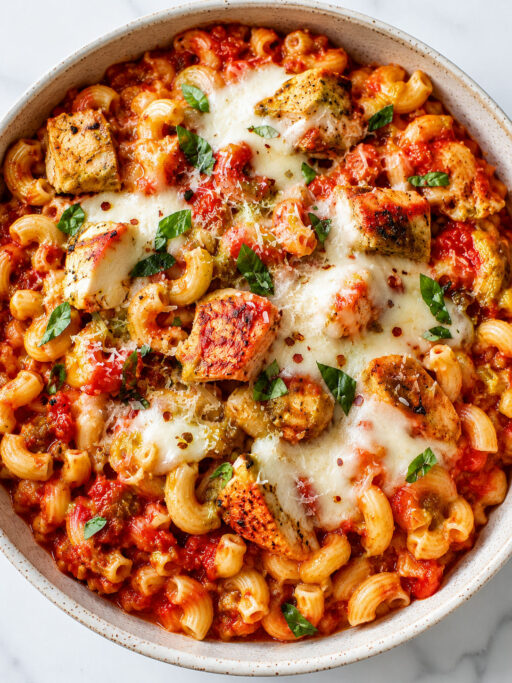
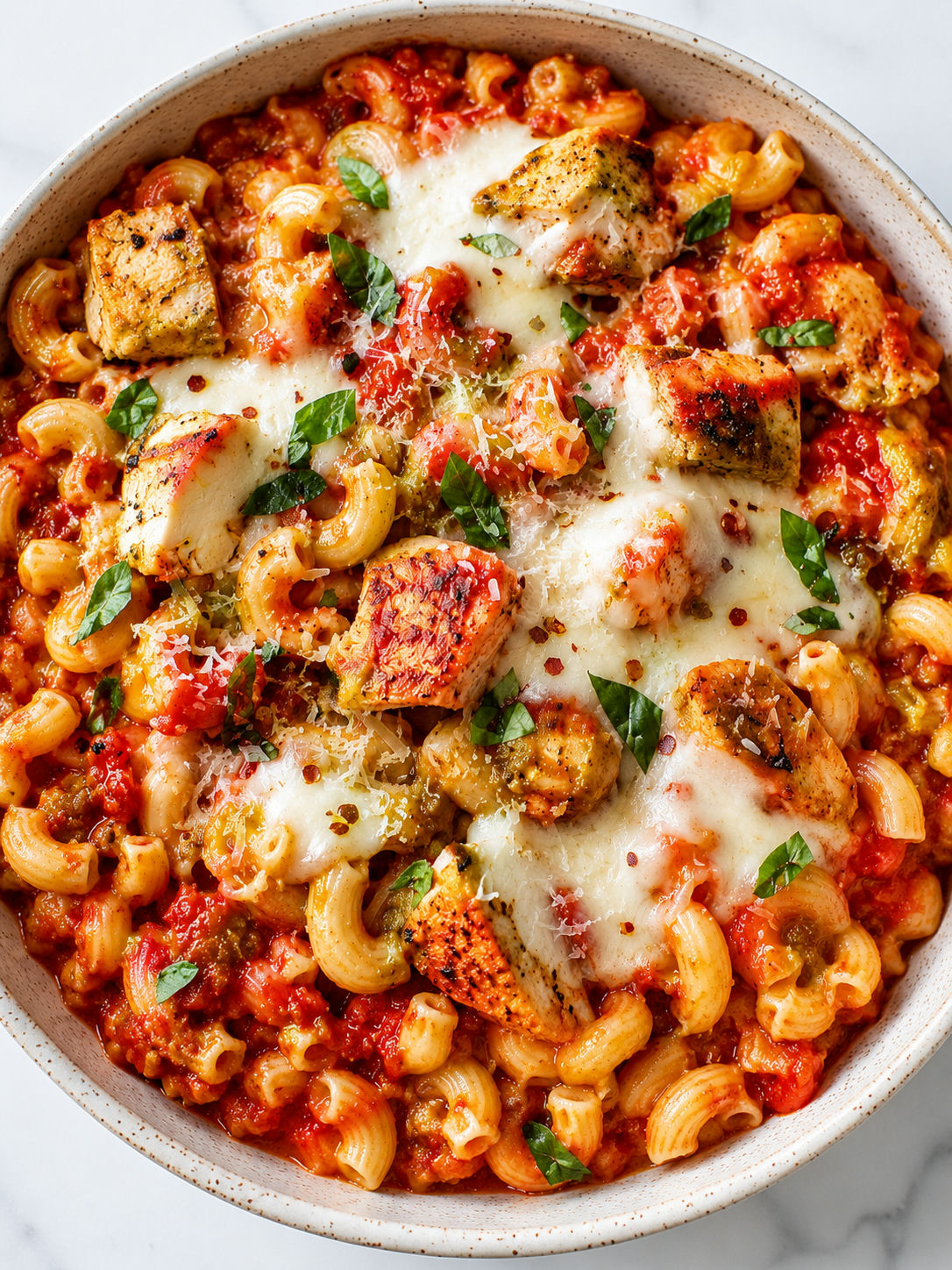

Chicken parmesan and mac and cheese are two separate cravings in most households. This recipe satisfies both at once, and nobody at the table has ever complained about that.
The key move is cooking the pasta directly in the tomato broth instead of boiling it separately. The pasta releases starch into the sauce as it cooks, which helps the cheese melt in smooth rather than clump. You get a glossy, thick sauce without any extra steps.
If you want the classic crunch, a handful of panko toasted in butter and scattered on top at the end is all you need. The oven stays off.
What Goes in the Pot
Short ingredient list, most of it already in the pantry. The only things worth buying fresh are the chicken and the mozzarella. Pre-shredded mozzarella has an anti-caking coating that blocks smooth melting, so buy a block and grate it yourself.
- Chicken breast. Cut into 1-inch pieces so they brown fast and cook through before the pasta is done.
- Elbow macaroni. The classic shape that holds up in tomato broth without turning soft.
- Marinara sauce. Use a jarred sauce you would eat straight out of the jar. Its quality determines the flavor of the whole dish.
- Chicken broth. Adds savory depth and gives the pasta enough liquid to cook in without a separate pot.
- Mozzarella. Freshly grated for a silky, stretchy melt. It is what makes this feel like chicken parm instead of plain tomato pasta.
- Parmesan. Sharpens the sauce and adds the salty, nutty finish that ties everything together.
- Heavy cream. A small pour that rounds out the tomato acidity and gives the sauce its body.
- Garlic. Three or four fresh cloves minced fine. Do not rush the garlic in the pan or it will turn bitter.
- Italian seasoning. Goes on the chicken and into the sauce so every component tastes cohesive.
From Sear to Melted Cheese
- Season the chicken. Toss the diced chicken breast with Italian seasoning, salt, and black pepper until evenly coated.
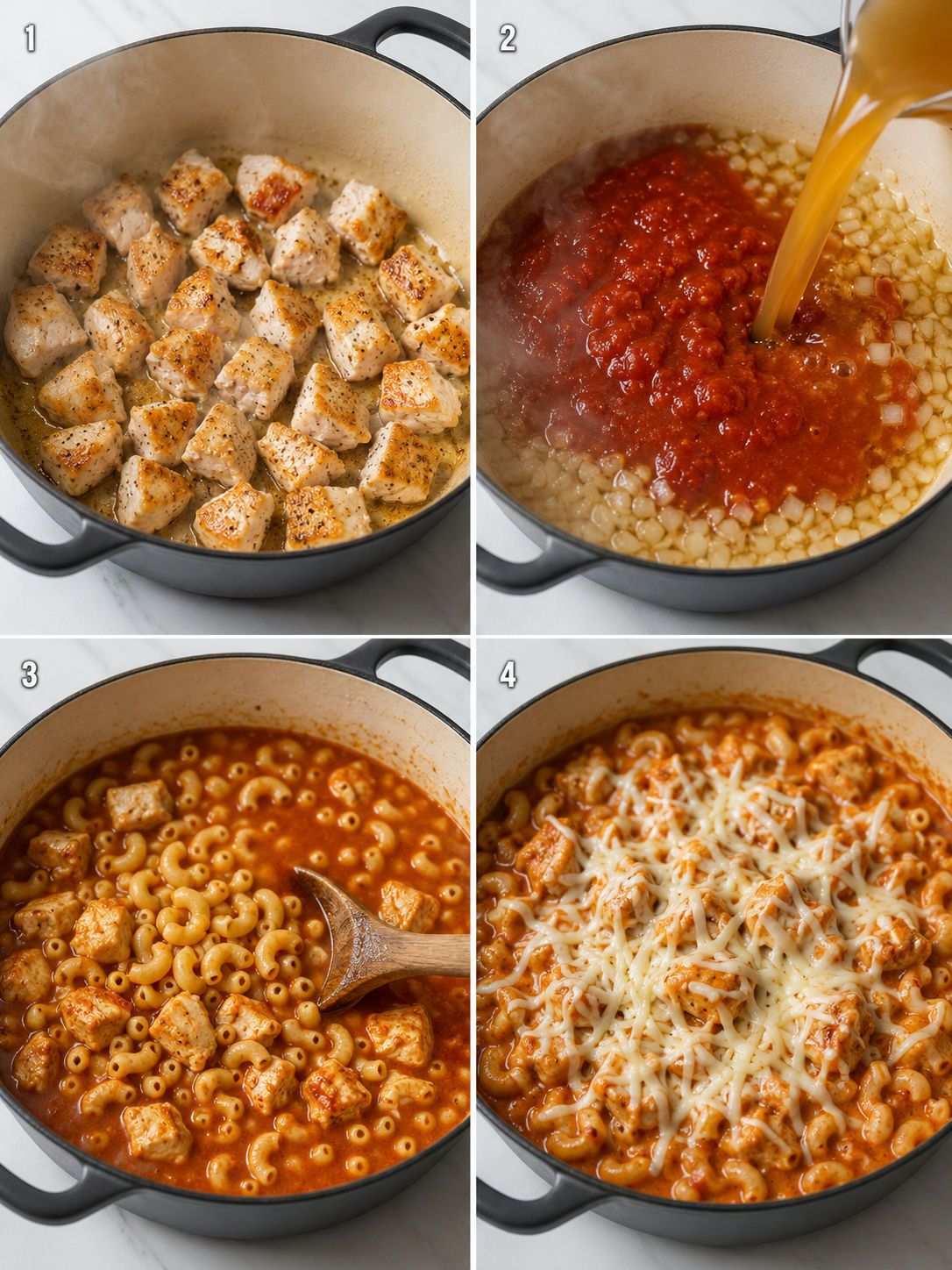
- Sear the chicken. Heat olive oil in a large deep skillet or Dutch oven over medium-high heat. Add the chicken in a single layer and cook without stirring for 2 to 3 minutes until browned on one side, then stir and cook another 2 minutes. Transfer to a plate. It does not need to be fully cooked through yet.
- Cook the aromatics. Lower the heat to medium. Add a little more oil if the pan is dry, then cook the diced onion for 2 to 3 minutes until softened. Add the minced garlic and cook another 30 to 60 seconds until fragrant.
- Build the sauce. Pour in the marinara and chicken broth. Stir to combine and scrape up any browned bits from the bottom of the pan.
- Add pasta and chicken. Stir in the dry macaroni and return the seared chicken with any resting juices to the pot. Bring to a boil, then reduce to a steady simmer.
- Simmer until tender. Cook uncovered, stirring frequently, for 12 to 14 minutes until the macaroni is tender and most of the liquid is absorbed. The sauce should look thick and glossy.
- Finish with cream and cheese. Remove the pot from the heat. Stir in the heavy cream. Add the mozzarella and parmesan in two or three batches, stirring between each addition until fully melted and the sauce is smooth. Taste and adjust the salt. Serve topped with fresh basil and red pepper flakes if using.
Why the Sear Matters
Skipping the sear and just dropping raw chicken into the broth works, but you lose all the flavor. The brown crust on the outside of the chicken breaks down into the sauce during the simmer and gives it a deeper, meatier taste than you would get otherwise. Two to three minutes per side in a hot, lightly oiled pan is all it takes. If the pan is crowded, work in two batches. Crowded chicken steams instead of sears, and the texture suffers for it.
The chicken does not need to be cooked through at this stage. It finishes in the simmering sauce and should reach 165°F by the time the pasta is done. A quick-read thermometer is the easiest way to confirm, per the USDA poultry safety guidelines.
Getting the Cheese to Melt Smooth
The most common mistake is adding cheese to a boiling pot. High heat causes the proteins in mozzarella to seize, and instead of a smooth sauce you get stretchy clumps. Take the pot off the burner completely. Let it sit for 30 seconds, then add the cream and cheese a handful at a time, stirring after each addition until it melts before the next goes in.
If the sauce looks broken or grainy, a tablespoon of warm water stirred in off the heat usually brings it back together. For another cheesy pasta that uses a similar off-heat finishing technique, this five-cheese mac and cheese is worth adding to the rotation.
Variations Worth Trying
This recipe is a solid base for a few easy directions. Add a teaspoon of red pepper flakes with the garlic for heat. Stir in a handful of baby spinach or frozen peas in the last two minutes of simmering for a vegetable. A layer of sliced fresh mozzarella and a quick pass under the broiler turns this into something closer to a baked pasta without any major extra work.
If you enjoy the chicken parmesan flavor in other formats, the crock pot chicken parmesan soup does the same profile in a much lighter, brothy bowl. And if you want to take mac and cheese somewhere completely different, buffalo chicken mac and cheese swaps the marinara for hot sauce and changes the whole personality of the dish.
Reheating and Storing Leftovers
The pasta keeps absorbing sauce in the fridge overnight. What was loose and glossy becomes thick and dense by the next day. Add two or three tablespoons of chicken broth or water per serving before reheating, then warm it on the stovetop over low heat, stirring often. The sauce loosens back up and the cheese gets creamy again. The microwave works in a pinch but tends to make the pasta gummy. If you enjoy meal-prepped mac and cheese, creamy crock pot mac and cheese is another version that holds up beautifully the next day.
FAQs
- Can I use chicken thighs instead of chicken breast?
-
Yes, and they work well here. Boneless, skinless thighs stay juicier and hold up to a longer simmer without drying out. Cut them into roughly 1-inch pieces so they cook at the same rate as the pasta.
- What pasta shapes work best for this dish?
-
Elbow macaroni is the obvious call, but penne, rotini, or cavatappi all hold up well in the tomato broth. Avoid thin pasta like angel hair. It overcooks before the chicken is done.
- Can I substitute the heavy cream?
-
Half-and-half works fine and lightens the dish slightly. Whole milk is thinner and may make the sauce less silky. For dairy-free, a splash of unsweetened oat milk can work, though the sauce will be less rich overall.
- How do I stop the cheese from clumping?
-
Pull the pot off the heat before adding the shredded cheese. A boiling sauce makes cheese seize up and go stringy. Add it in two or three handfuls, stirring between each addition so it melts gradually into the sauce.
- How long do leftovers keep?
-
Up to four days in an airtight container in the fridge. The pasta absorbs the sauce as it sits, so add a few tablespoons of broth or water per serving when reheating to loosen it back up. Reheat low and slow on the stovetop for best results.
- Can I make this ahead of time?
-
The chicken and sauce base can be made a day in advance. Store it without the pasta and add the dry macaroni when you reheat it, cooking the pasta fresh in the sauce. That way nothing gets waterlogged overnight.
- What can I serve alongside this?
-
A simple green salad or garlic bread is all you need. The dish is hearty enough on its own. A handful of baby spinach stirred in during the last minute of cooking wilts right into the sauce without any extra effort.
References
Sources cited in this recipe.