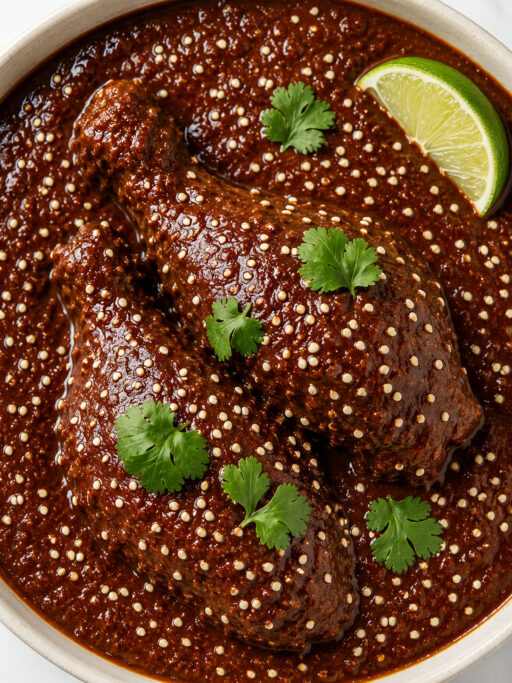
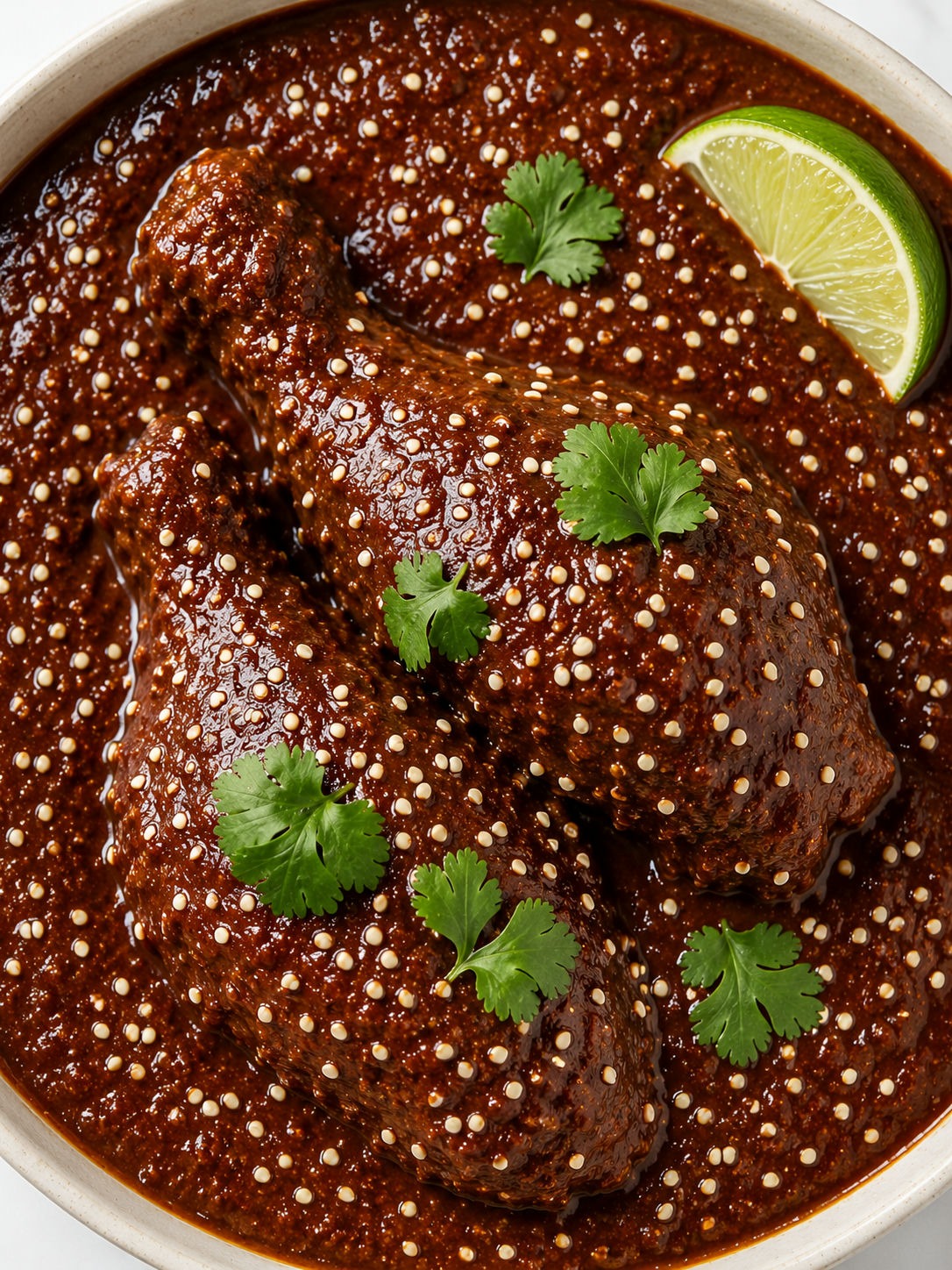

Chicken mole takes time, and that is the whole point. The reward is not just the sauce. It is the smell when three types of dried chiles rehydrate in hot broth, and the moment a tablet of Mexican chocolate dissolves into something that looks almost black but smells unlike anything else you have made at home. This is one of Mexico’s most celebrated dishes, and it earns every minute you give it.
The recipe follows the classic Mole Rojo approach from central Mexico. Guajillo, ancho, and pasilla chiles build the body and the layered heat. Toasted corn tortillas thicken the sauce without flour. Mexican chocolate and peanut butter round the edges. The chicken legs simmer in broth first, then finish inside the mole so they absorb every layer of flavor. Plan on two hours total. Most of that is hands-off simmering, and the sauce gets better overnight.
The chiles and everything else you need
The three dried chiles are the backbone of this mole, and getting them right matters more than anything else on the list. Look for pliable, fragrant chiles at a Latin grocery store, not brittle or faded ones. Mexican chocolate is the other ingredient worth tracking down before reaching for a substitute.
- Chicken legs. Bone-in, skin-on legs give you a rich homemade broth as a byproduct and stay moist through the long simmer in the sauce.
- Guajillo chiles. The fruity, slightly tangy workhorse of the sauce. They contribute the deep red color and a mild, clean heat.
- Ancho chiles. Dried poblanos with an earthy, slightly sweet character. They add body and smokiness without sharpness or fire.
- Pasilla chiles. Dark and complex with hints of dried fruit. They deepen the sauce in a way the other two chiles do not cover on their own.
- Roma tomatoes. Charred under the broiler before blending. They add acidity and body, and the charring contributes a faint smokiness.
- Mexican chocolate. Abuelita or Ibarra tablets, sweetened and cinnamon-spiced. One tablet rounds the bitterness of the chiles into something rich and balanced.
- Corn tortillas. Toasted until crisp, then blended in. They thicken the sauce naturally without flour or starch.
- Peanut butter. A small amount adds nuttiness and helps the sauce cling to the chicken.
How the mole comes together
- Simmer the chicken. Place the chicken legs in a large pot with 6 cups of water, half the onion, garlic, and 1 teaspoon of salt. Bring to a boil, skim any foam, then reduce heat to a gentle simmer. Cover and cook for 35-40 minutes until cooked through. Remove the chicken and reserve all the broth.
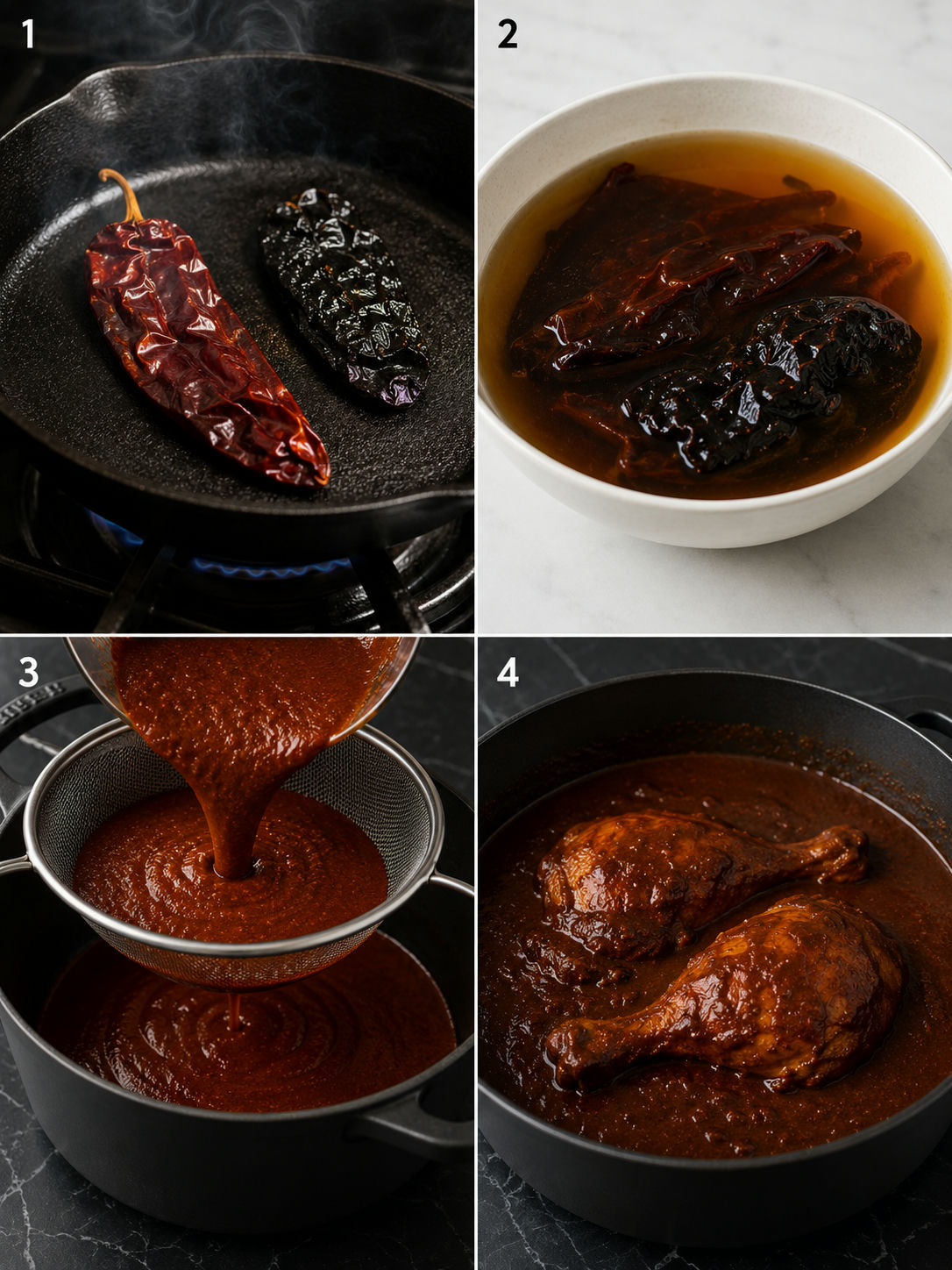
- Toast the dried chiles. Wipe each chile with a damp cloth. Press them one at a time flat in a dry skillet over medium heat for 10-15 seconds per side until fragrant and slightly puffed. Pull them before any edge turns black. Remove the stems and shake out the seeds.
- Rehydrate the chiles. Put all toasted chiles in a bowl and cover with 2 cups of hot chicken broth. Let them soak for 20 minutes until completely soft.
- Char the tomatoes and onion. Place quartered Roma tomatoes and sliced onion on a baking sheet under the broiler on high for 8-10 minutes until softened and darkened in spots. This adds both sweetness and smokiness to the finished sauce.
- Blend and strain the sauce. Add the soaked chiles with their soaking liquid, charred tomatoes, onion, garlic, toasted tortillas, cinnamon, cumin, and 2 more cups of broth to a high-powered blender. Blend on high for about 2 minutes until completely smooth. Strain through a fine mesh strainer, pressing the solids firmly with the back of a spoon.
- Fry the sauce. Heat 2 tablespoons of oil in a large Dutch oven over medium-high heat until shimmering. Carefully pour in the strained sauce. It will splatter. Cook, stirring frequently, for 8-10 minutes until the sauce darkens slightly and thickens.
- Add the chocolate and season. Break the Mexican chocolate into pieces and add to the pot along with the peanut butter and sugar. Stir until fully melted and incorporated. Add broth a cup at a time until the sauce coats a spoon but still pours freely. Season with salt.
- Simmer chicken in the mole. Add the cooked chicken legs to the pot. Reduce heat to low and simmer uncovered for 25-30 minutes, turning once halfway through, until the chicken has absorbed the sauce and both have deepened in flavor. Serve over rice with warm corn tortillas and a scatter of sesame seeds.
Why three types of chiles and not just one
Each chile is doing specific work. Guajillos handle the color and a clean fruity heat. Anchos bring the earthy, faintly chocolatey base note that gives mole its characteristic depth. Pasillas add a darker fruitiness that keeps the sauce from tasting flat or one-dimensional. Take any one away and you notice it.
If you can only find two of the three, lean on anchos as your base and increase their quantity before removing another variety. The sauce will still be good, just slightly less layered. For another dish that gets serious depth from poblano peppers, the Creamy Poblano Chicken Rellenos Soup is worth making alongside. For a thorough guide to dried chile varieties, Mexico in My Kitchen covers them in detail.
What the chocolate actually does to the sauce
Mexican chocolate is not a dessert ingredient dropped into a savory pot. It is a seasoning. The sugar tames the natural bitterness of the chiles. The cinnamon reinforces the spice notes already in the sauce. The cacao fat smooths the texture so the mole clings to the chicken rather than sliding off.
One Abuelita tablet split across six servings contributes less than a teaspoon of sugar each. This is not a chocolate dish. If you use semi-sweet chocolate chips instead, add a half teaspoon of cinnamon to compensate for the aromatic loss. The USDA FSIS recommends cooking poultry to 165°F internal temperature, which the initial broth-simmering step handles before the chicken ever enters the mole.
Make the sauce a day ahead and it gets better
Mole is one of those rare dishes that genuinely improves overnight. The chile bitterness mellows, the chocolate integrates more fully, and the whole sauce tastes rounder and more cohesive by morning. Make the sauce through the chocolate step the evening before, cool it completely, and refrigerate. Add the chicken fresh when you reheat the next day.
If you are planning a full Mexican spread, the Authentic Mexican Red Rice and Authentic Pinto Beans both store just as well and pair perfectly with mole. Cook all three the day before and you have a feast that reheats in under 20 minutes.
How to serve chicken mole at the table
The classic presentation is simple: one or two chicken legs sitting in a pool of mole on each plate, a scoop of rice alongside, and warm corn tortillas for scooping. A scatter of white sesame seeds on the sauce is traditional and adds a faint nuttiness. Queso fresco, sliced raw onion, or a sprig of cilantro all work well as garnishes.
For a bigger table, Mexican Chicken Flautas make a strong starter before the mole arrives. Keep the rest of the spread simple. The sauce is the centerpiece and it earns the spotlight.
FAQs
- Can I use chicken breasts instead of chicken legs for mole?
-
You can, but legs and thighs hold up far better in the long simmer. Breast meat can turn dry and stringy after 30-plus minutes in the sauce. If you prefer white meat, add it during the last 20 minutes of simmering and pull it as soon as it reaches 165°F.
- Where can I find guajillo, ancho, and pasilla dried chiles?
-
Any Latin grocery store will carry all three. Larger supermarkets often stock them in the international aisle in small cellophane bags. Look for chiles that are still pliable and fragrant, not brittle or dusty. They are also easy to order online if you cannot find them locally.
- What can I substitute for Mexican chocolate in mole?
-
Mexican chocolate like Abuelita or Ibarra is sweeter and seasoned with cinnamon, which is why it works so well here. If you cannot find it, use 3 oz of dark chocolate at 70% cacao plus a half teaspoon of cinnamon and a teaspoon of sugar. Semi-sweet chocolate chips in the same amount also work, though the flavor will be slightly flatter.
- Can I make chicken mole ahead of time?
-
Yes, and it actually tastes better the next day. The chile bitterness mellows and the chocolate integrates more fully overnight. Make the sauce through the chocolate step, cool it completely, and refrigerate. Reheat gently on the stovetop and add the cooked chicken when the sauce is hot.
- How do I store and freeze leftover mole sauce?
-
Leftover mole keeps refrigerated for up to 5 days. For longer storage, freeze the sauce in airtight containers for up to 3 months. Thaw overnight in the refrigerator and reheat on the stovetop with a splash of broth to loosen it back to the right consistency.
- How spicy is this chicken mole?
-
This recipe is mild to medium heat. Guajillo and ancho chiles are not hot. Pasilla adds complexity without real fire. For more heat, add one dried chipotle or árbol chile when soaking the others. To dial it back, reduce the guajillo count by two or three chiles.
- Do I really need to strain the mole sauce?
-
Straining is worth the two extra minutes. Even a powerful blender leaves behind chile skin fragments that give the sauce a slightly gritty texture. Push the sauce through a fine mesh strainer and press the solids firmly with a ladle. The result is noticeably smoother and far more restaurant-quality.
References
Sources cited in this recipe.