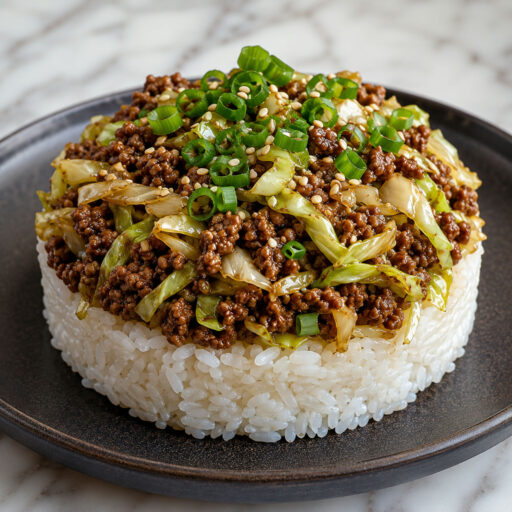
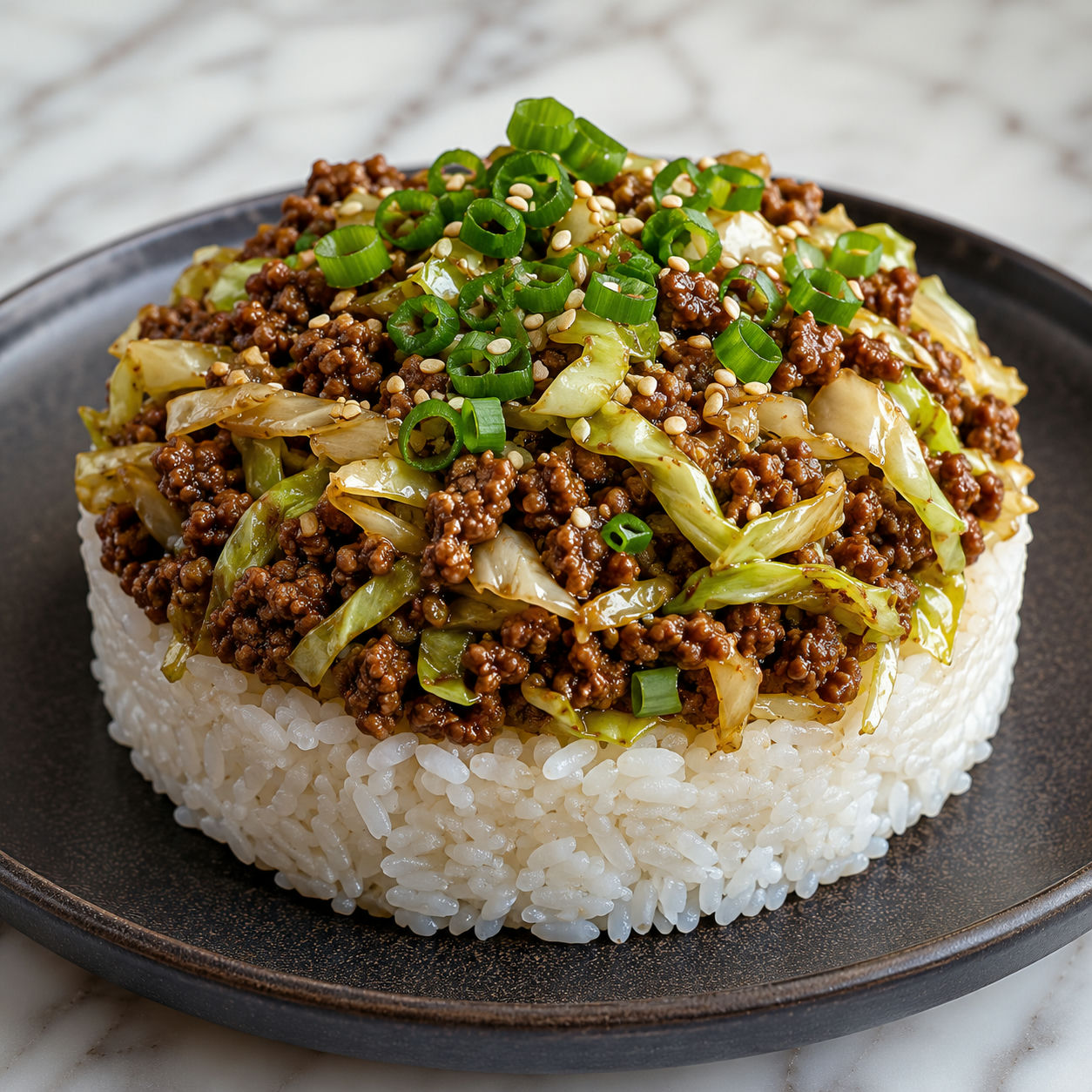

The stir fry is already a reliable weeknight dinner. The stack version just makes it feel like you tried harder. Ground beef and shredded cabbage cook in a single wide skillet with garlic, ginger, soy sauce, and sesame oil, then get layered over a compact cylinder of steamed rice so every forkful hits all three at once.
One pound of lean beef feeds four people cleanly. The cabbage softens just enough to be tender but keeps enough bite to give the dish some texture. The whole thing is done in about thirty minutes with a short ingredient list you probably already have.
Skip the rice to make this naturally low-carb, or keep it for a bowl that actually fills you up. Either way, the technique is the same.
The Short Shopping List
Lean ground beef and a half-head of green cabbage do most of the work here. The sauce builds on soy sauce, oyster sauce, sesame oil, and rice vinegar, all pantry staples in most kitchens. Keep the list short and the quality of each ingredient will show.
- Lean ground beef (90/10). Enough fat to stay juicy without leaving a greasy puddle in the pan. Higher fat content works but you may want to drain excess before adding the sauce.
- Green cabbage. Half a small head, shredded thin. It wilts down dramatically so the raw volume looks much bigger than what cooks out.
- Garlic and fresh ginger. Minced fine so they cook fast and distribute through the whole dish. These two carry the Chinese flavor profile more than anything else in the pan.
- Soy sauce. The salt and umami backbone. Use low-sodium if you are watching sodium intake, and tamari for a gluten-free version.
- Oyster sauce. Adds savory depth and a touch of sweetness that soy alone cannot replicate. One tablespoon goes a long way.
- Toasted sesame oil. Drizzled at the end, not cooked in. Heat destroys its aroma, so it works best as a finishing touch.
- Rice vinegar. Cuts the richness and brightens the whole dish without adding obvious tartness.
- Jasmine rice. The base of the stack. Start it while the stir fry comes together so everything finishes at the same time.
- Green onions and sesame seeds. The garnish that makes the plate look deliberate.
Building the Stack Step by Step
- Cook the rice. Start the jasmine rice first using a 1:1.5 ratio of rice to water. Bring to a boil, cover, reduce to low, and simmer for 15-18 minutes. Keep covered and warm until you are ready to plate.
- Mix the sauce. Stir together the soy sauce, oyster sauce, rice vinegar, and sugar in a small bowl and set aside. The sesame oil goes in at the very end, not here.
- Sear the beef. Heat a wide skillet or wok over medium-high until hot. Add the oil, then the ground beef in one flat layer. Leave it alone for a full minute to brown on the bottom, then break it apart and cook through, 4-5 minutes total. Drain any excess liquid that pools in the pan before moving on.
- Add the aromatics. Push the beef to the sides of the pan. Add the garlic, ginger, and the white parts of the green onions to the center. Cook for 30-45 seconds, stirring constantly, until fragrant. Then fold everything together.
- Stir fry the cabbage. Add the shredded cabbage and toss with the beef and aromatics. Cook over high heat, tossing every 30 seconds, for 3-4 minutes until the cabbage is tender but still has some bite.
- Add the sauce and finish. Pour the prepared sauce over the pan and toss to coat. Cook for one more minute until glossy. Remove from heat and drizzle with sesame oil. Toss once more.
- Stack and serve. Pack hot steamed rice firmly into a small ramekin or bowl, then invert it onto each plate to form a compact cylinder. Spoon the beef and cabbage over and around the rice base. Garnish with the green onion tops and sesame seeds and serve immediately.
Why a Hot Pan Matters
The biggest mistake in a ground beef stir fry is adding the meat to a cold pan. A cool pan means the beef sits in its own liquid and steams. The flavor goes flat and the texture turns dense. A hot pan sears the beef and builds fond on the bottom of the skillet, and that is where the deeper savory notes come from.
Medium-high heat on most home stoves is enough. You should hear a clear sizzle the moment the beef hits the oil. If you hear a dull bubble, let the pan heat another minute before you start cooking. For food safety, the USDA FSIS ground beef safety guide recommends cooking ground beef to an internal temperature of 160°F (71°C).
Keeping the Cabbage Crisp
Cabbage holds a lot of water. When it hits a hot pan it releases steam quickly, which can drop the temperature and turn the dish into a braise. The fix is to shred it thin so it cooks fast, and keep the heat high so the moisture evaporates before it pools.
Three to four minutes at high heat gives you cabbage that is tender at the center but still has a slight crunch at the edges. That contrast is what keeps the dish from feeling heavy. Cabbage is also low in calories and high in fiber and vitamin C, so it earns its place here nutritionally just as much as it does for flavor. Healthline’s cabbage nutrition overview covers its full profile. For more ideas on tender-crisp stir-fried vegetables, the garlic butter stir-fried vegetables recipe is a good technique reference.
Getting the Sauce Balance Right
The base sauce is savory and lightly sweet with a background of acid from the rice vinegar. Most people find it balanced as written. To make it saltier, add soy sauce in small increments rather than dumping more in at once. For more sweetness, a teaspoon of honey or brown sugar blends in cleanly. More heat comes from red pepper flakes or a teaspoon of chili garlic sauce. A tablespoon of doubanjiang added with the garlic and ginger gives it a Sichuan-style depth if you want to go that direction.
The all-purpose stir fry sauce recipe on this site is a useful reference if you want to build a bigger batch to keep in the fridge and pull from across multiple weeknight dinners.
Swaps and Variations That Work
The base technique handles a lot of substitutions without much adjustment. Ground pork is more traditional in Chinese home cooking and pairs beautifully with the same sauce. Ground turkey keeps the dish lean and mild. Napa cabbage is softer and sweeter than green and cooks in about two minutes less time.
To keep it low-carb, skip the rice entirely and serve the stir fry over cauliflower rice or glass noodles. For another quick ground beef stir fry built on a similar sauce, ground beef and broccoli swaps the cabbage for broccoli and is just as fast. The ground beef and veggie bowl is a good single-pan option when you want to mix in more vegetables during the week.
Storage and Meal Prep Tips
Store the stir fry and rice separately in airtight containers in the fridge for up to four days. Reheat the beef and cabbage in a skillet over medium heat with a splash of water to revive the sauce rather than the microwave, which can make the cabbage limp. The flavors actually sharpen overnight as the sauce soaks in, so day-two leftovers are genuinely good.
This is a natural meal prep dish. If you are batch cooking for the week and want to skip the stack presentation, the classic Chinese beef and cabbage stir fry on this site is the same flavor profile in a quicker, no-plating format. The beef and cabbage mixture (without rice) also freezes well for up to two months. Thaw overnight in the fridge and reheat on the stove.
FAQs
- Can I make this without the rice and keep it low-carb?
-
Yes, the stir fry works completely on its own. Skip the rice and serve the beef and cabbage mixture straight from the pan, or layer it over cauliflower rice instead. The sauce and seasoning hold up either way, and you cut the carbs significantly without losing any of the flavor.
- What kind of cabbage works best for this recipe?
-
Green cabbage gives a firm, slightly sweet bite and holds up well in a hot pan without turning mushy. Napa cabbage is softer and cooks faster, about two minutes less, and has a milder flavor. Both work well. Avoid red cabbage, which turns an unappetizing color when stir fried at high heat.
- Can I substitute ground turkey or chicken for the beef?
-
Yes. Ground turkey is the most natural swap and works seamlessly with the same seasonings. Ground chicken is leaner and slightly drier, so add an extra teaspoon of oil to the pan. The cook time stays the same. The dish will be lighter in fat but still flavorful with the soy-ginger sauce carrying most of the work.
- How do I store and reheat leftovers?
-
Store the stir fry and the rice separately in airtight containers in the fridge for up to four days. Reheat the beef and cabbage in a skillet over medium heat with a splash of water to loosen the sauce. Microwaving works too but can make the cabbage limp. Rice reheats best with a small splash of water added before microwaving.
- Is this recipe gluten-free?
-
Not as written, since regular soy sauce and most oyster sauce brands contain gluten. To make it gluten-free, use tamari in place of soy sauce and a certified gluten-free oyster sauce. The flavor is nearly identical and the dish qualifies as fully gluten-free with those two swaps.
- Can I meal prep this for the week?
-
This recipe is great for meal prep. Cook the full batch, portion it into containers, and refrigerate for up to four days. The flavors actually deepen overnight as the sauce soaks into the beef. Keep the rice separate if you want to reheat each component at the right texture.
- How do I get a good sear on the beef instead of steaming it?
-
The pan needs to be hot before the beef goes in, and the beef needs to go in one flat layer rather than being stirred right away. Let it sit undisturbed for a full minute to brown on the bottom before breaking it apart. Stirring immediately drops the temperature and causes the meat to release liquid and steam instead of sear.
References
Sources cited in this recipe.